
Excavation contractor in Corsicana, TX
Mass excavation, cut and fill, and grading near Corsicana
Track hoes, dozers, track loaders and off-road dump trucks to cut, haul, fill and bring a site to grade.
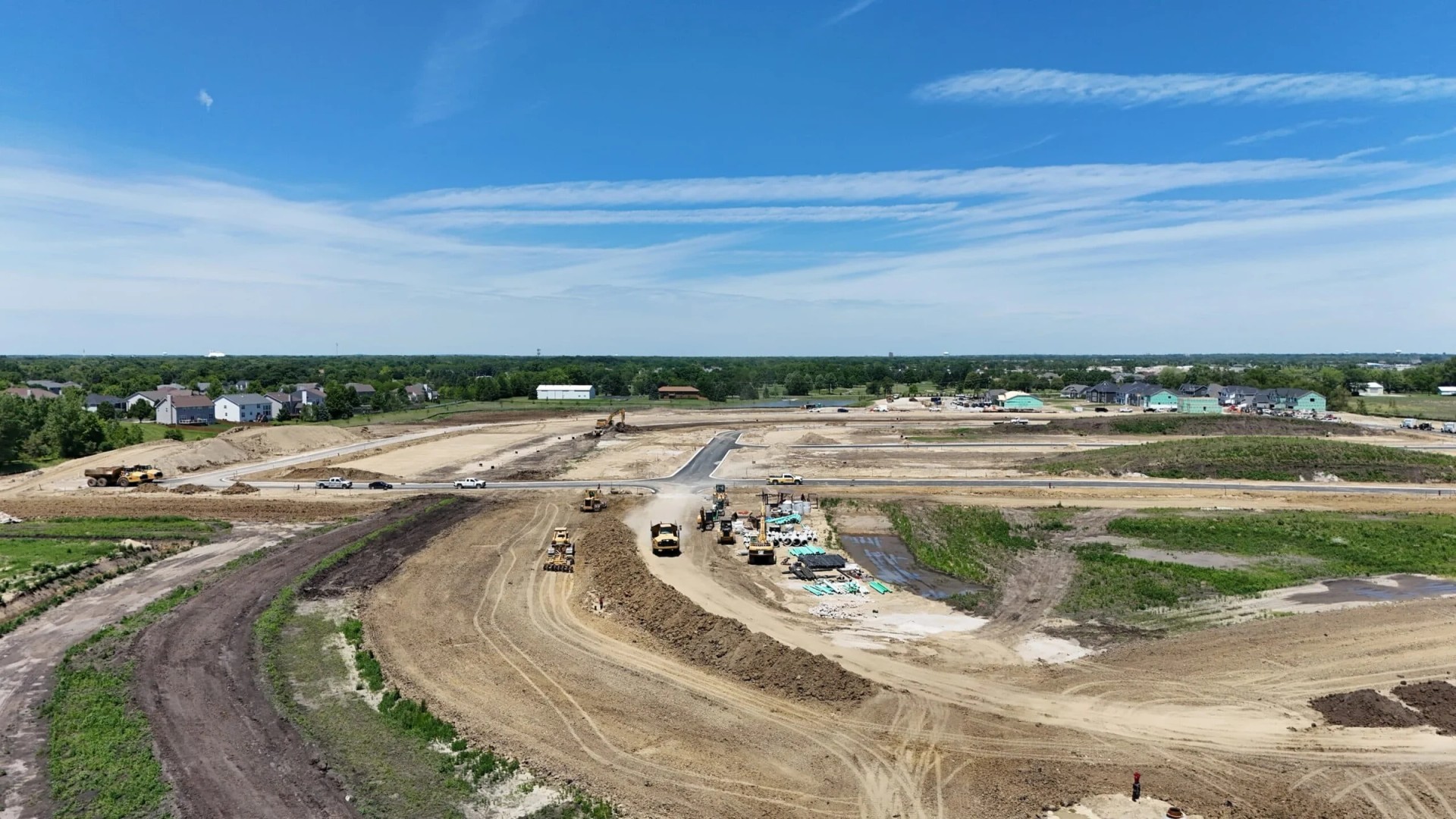
A three-acre cut that averages two feet deep puts 9,680 cubic yards of dirt in motion before the material is even loosened. On a job that size, the crew needs to know which dirt can go into fill, how the trucks will move across the site, and what elevation each area needs to hit before the next crew comes in.
We handle mass excavation, cut and fill, rough grading, and finish grading for commercial sites, large lots, and acreage projects around Corsicana, Texas. We run track hoes, dozers, track loaders, and off-road dump trucks. That lets us handle the cut, move the material across the property, place fill, and bring the site to the agreed grade with one crew.
How we shoot grade
Before the first cut, we establish what elevations we're working to and what point we're measuring from. On a commercial site, that usually means working from the project benchmark and the surveyor's stakes. On an acreage job, we confirm the proposed elevations and tie-ins with the owner or builder before digging.
Shooting grade means checking how high or low the ground actually is. With a laser level and grade rod where the site calls for them, we can tell how much dirt needs to come out of a high spot, how much fill a low area needs, and how the work is tracking as we go. We check the places where a small difference shows up later, including pad corners, driveway tie-ins, ditch bottoms, and the ground around drainage inlets.
We also confirm which surface we're grading to. A plan can show where the finished pavement sits, while our scope calls for the subgrade below it. That lower elevation leaves room for the specified base and pavement. On a building pad, the foundation details tell us where the dirt work ends. Those are details we want settled before we're trimming the last pass.
Cut and fill that makes use of the dirt you have
A cut takes high ground down. Fill brings low ground up. The first question is how much of the material coming out of the cut is suitable for where it needs to go. A site can have plenty of dirt on paper and still need imported fill if a good portion of the excavation is topsoil, buried debris, rock, or soil that doesn't meet the project requirements.
We work through it in order.
- Separate material as it comes out. Topsoil that has a use later can be stockpiled for finish work. Roots, organic debris, and unsuitable soil get handled according to the scope.
- Move suitable soil where it's needed. When the material meets the fill requirements, we can move it from the cut to a pad, embankment, or low section. If the receiving area is ready, moving it there directly can save handling the same dirt twice.
- Build the fill in lifts. We spread and compact the fill in layers. Soil moisture, lift thickness, and any required testing come from the conditions and the project specifications. If a cut uncovers a soft area or buried material, we address what that means for the scope before covering it.
- Bring the site to grade. Once the bulk of the dirt is moved, we trim the high spots, check the low points, and tie the work into the surrounding ground. On lots and roads, that includes the slope that carries water to the ditch, swale, or inlet.
An estimate should make clear how the dirt is being measured. A cubic yard in the ground, a loose yard in a truck, and a compacted yard in a fill are different quantities. We look at what can be reused, what has to come in, and what has to be hauled off so those moves are accounted for in the quote.
Keeping a large excavation moving
We plan where to start the cut, where the trucks will turn, and where the loads will go. On a big site, an excavator can be loading while the off-road trucks cycle to the fill and a dozer spreads material behind them. Track loaders help move material around tighter work areas, and the dozers handle broad cuts, spreading, and shaping. The haul distance, ground conditions, and pace of fill placement all affect how we set up the crew.
The order matters when other trades are working on the same property. We look at which area the builder needs first, where stockpiles can sit clear of access, and which routes need to stay open for trucks. We also look at how the site drains during the work. A low haul route that goes soft after a storm can slow down a whole section of the job.
We take on commercial building sites, truck stops and overnight truck parking lots, equipment yards, access roads, and large acreage projects. That might mean cutting a commercial lot down, building up the low side of a shop site, or moving enough material to open a road into the back of a property. For a project that starts in brush and ends at a compacted pad, we can include land clearing and site prep in the earthwork scope.
Trenches, drainage cuts, and culverts
Drainage and utility trench excavation can be included in the job. Before digging, we review available utility information and coordinate required locates through Texas811. We also ask about private lines, including water to a barn, power to a shop, irrigation, or septic, since those can need a separate locate.
A ditch needs enough fall to get water to its outlet. A culvert has two elevations to check, one where water goes in and one where it comes out. The invert is the inside bottom of the pipe, and the excavation needs to leave room for the bedding shown on the plans. We look at how the pipe and ditch meet at both ends so the work ties into the drainage on the rest of the site. The estimate spells out the excavation and any bedding, backfill, or grading included in the job.
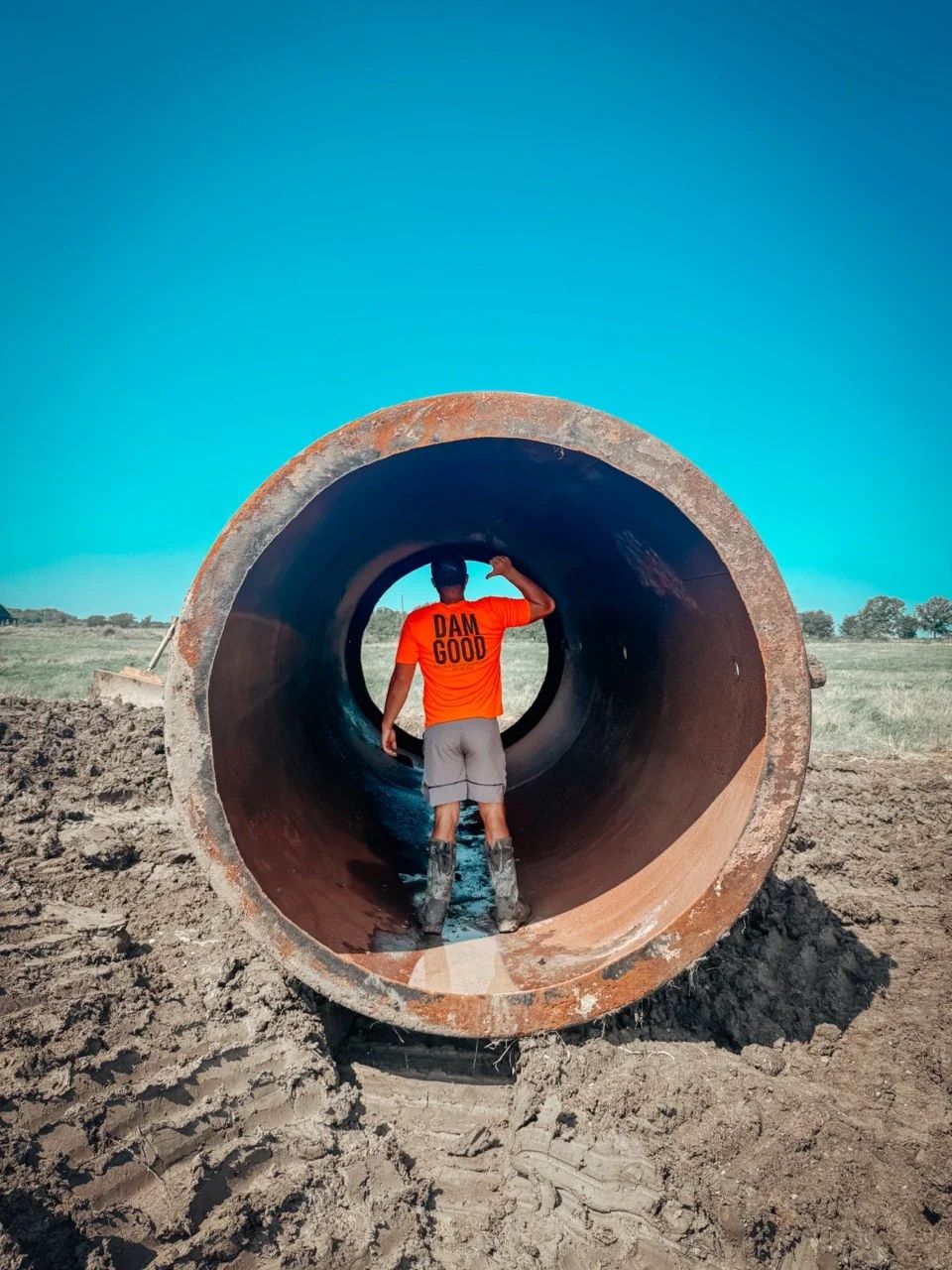
A ditch needs enough fall to get water to its outlet.
Where the excavated material goes
We plan for the spoil before excavation starts. Suitable material may go straight into fill. Topsoil may stay on the property for later use. Excess dirt, roots, rock, and debris may need to be hauled off. On-site hauling and off-site disposal are different parts of the work, and we spell out which ones the estimate covers. We also look at where a stockpile can sit without blocking truck access or washing into a ditch.
Some of our biggest earthmoving jobs are ponds and lakes. A large basin can produce a lot of material, and where it can be used or placed makes a real difference in how we run the job. If the project includes smaller areas along the edges or trails where the main work is cutting back brush, we can discuss forestry mulching as part of the overall scope.
Send us the plans or show us the ground
If you have grading plans, send the latest set along with any earthwork quantities and soils report. Tell us what the next crew needs when we're done and where trucks can get in. For a ranch, shop, or acreage job, a map pin and a few photos are enough to start. We'll look at the cut, the fill, and the haul before telling you what it'll take to do the job.
How the job runs
Send the plans or a pin
The latest grading plans, earthwork quantities and soils report if you have them, or a map pin and a few photos.
Send the detailsWe look and quote
We look at the cut, the fill and the haul, check for utilities and give you a free, detailed estimate.
How estimates workWe cut, fill and grade
We move the dirt, build the fill in compacted lifts and bring the site to the agreed grade.
Site prep & building pads
Where we work
We take excavation work from Corsicana, TX up I-45 to Dallas, TX and Fort Worth, TX, across to Waco, TX and down to Houston, TX, and surrounding areas.
Questions about mass excavation
What does mass excavation include?
Mass excavation, cut and fill, rough grading and finish grading, with drainage and utility trenches, ditches and culverts where the job needs them. For a project that starts in brush and ends at a compacted pad, land clearing and site prep can go in the same scope.
How is the dirt measured in an estimate?
A cubic yard in the ground, a loose yard in a truck and a compacted yard in a fill are different quantities. The estimate makes clear how the dirt is measured, and accounts for what can be reused, what has to come in and what has to be hauled off.
Where does the dirt go?
We plan for it before the first cut. Suitable material can go straight into fill, topsoil can stay on the property for later use, and excess dirt, roots, rock and debris may be hauled off. The estimate spells out which of those it covers.
Do you dig trenches and drainage cuts?
Yes. Drainage and utility trench excavation can be part of the job. We coordinate required locates through Texas811 before digging, and ask about private lines to a barn, shop, irrigation or septic.
What should I send for an estimate?
If you have grading plans, send the latest set with any earthwork quantities and soils report. For a ranch, shop or acreage job, a map pin and a few photos are enough to start.
Are excavation estimates free?
Yes, free and detailed, with the cost and what it's based on explained before work starts.
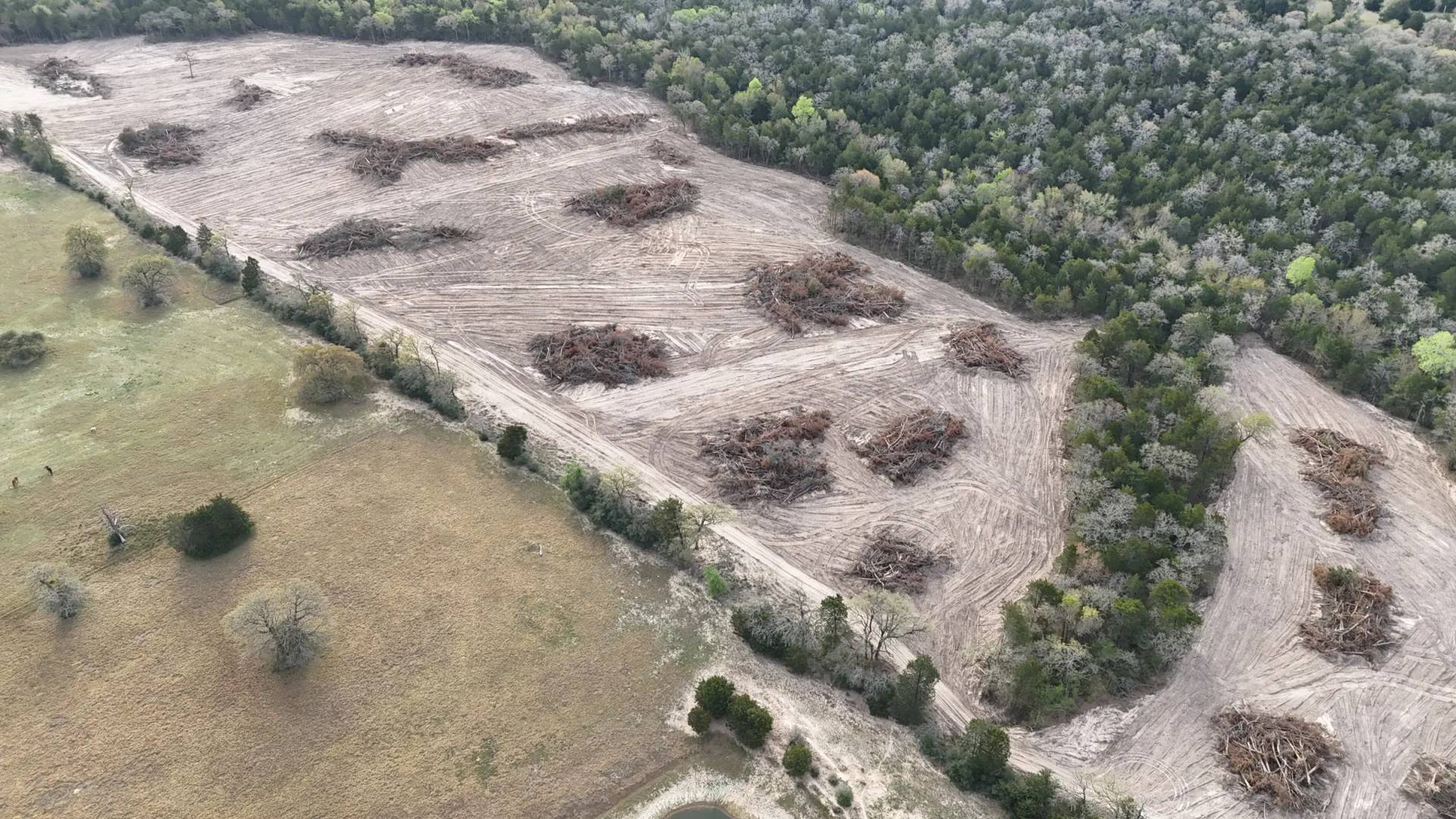
Let us clear the way