
Site prep contractor in Corsicana, TX
Site prep and building pads near Corsicana, Texas
Clearing, excavation, grading and compacted building pads, with one crew and one estimate.
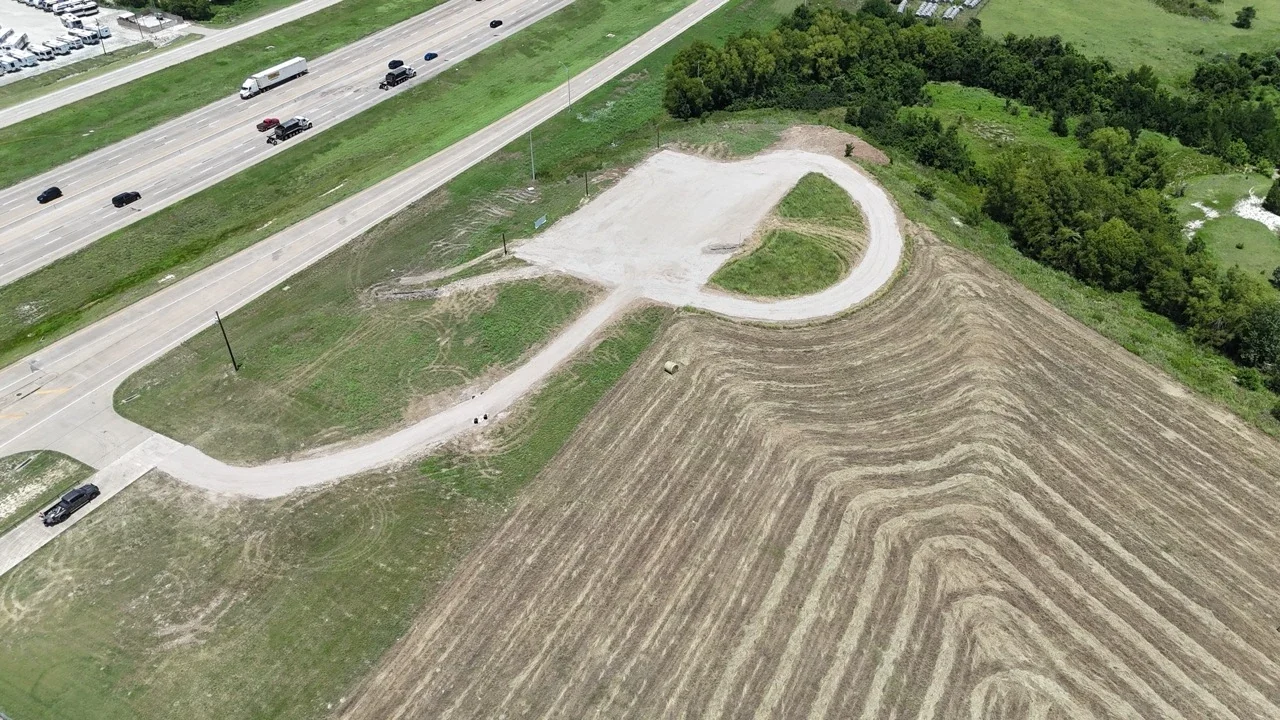
Before you price a house pad, stand where the front door will be and look back toward the road. How much dirt will it take to get the house to the right height? Can a concrete truck make the turn? Where will the rain coming off the high side of the property go? Those answers can change the job as much as the size of the house.
We handle land clearing, excavation, grading, and compacted building pads with one crew. We work with builders and developers on residential and commercial sites and with landowners putting a house, shop, or barn on acreage. We'll walk the site, look over any plans you have, and put the work in one estimate so you know what the next crew will be stepping onto.
What goes into the price of dirt work
Two building pads with the same dimensions can take very different amounts of work. On high ground, there may be suitable soil we can cut from one side and use on the other. On a low or sloping site, the pad may need more fill brought in, along with enough room around it to bring the grade back down to the surrounding ground.
The elevation matters as much as the footprint. On a one-acre lot, changing the grade by an average of six inches changes the earthwork by about 807 cubic yards in place. That's the volume while the soil is still in the ground. Truckloads depend on how the material handles once it's dug, and the amount of fill needed depends on the volume after compaction. We look at what can be reused, what needs to come in, and what needs to leave before we price the haul.
We also look for things the plans or photos may miss. An old barn site can have buried concrete or loose fill under the grass. A low corner can stay soft long after the rest of the property dries. If clearing exposes a condition that changes the work, we'll show you what we found and talk through the options before covering it up.
How we build the pad
Start with the ground under it
We clear the work area and strip topsoil, roots, and debris from the pad footprint as the job calls for it. Good topsoil can be set aside for areas you plan to grass later. Under a pad, roots and buried wood can decay and leave voids, and soft or unsuitable soil can move under load. If the soils report calls for removing some of that ground and replacing it with approved fill, we include that work in the scope.
Get the pad height from the builder's plans
The finished floor elevation is where the top of the floor will sit. The pad elevation is where the dirt work finishes. The foundation details determine the difference. We confirm the pad elevation and the reference point we'll measure from, along with how far the pad needs to extend past the building footprint. That extra room matters on a sloping site, where the edge of the pad has to tie back into the property.
Place and compact fill in layers
We build the pad in lifts, compacting each layer before the next goes on. The right lift thickness and moisture depend on the soil and the project requirements. Wet ground may need time to dry. Dry fill may need water mixed in before it can compact properly. Where the plans call for density testing, we identify who schedules the testing and which parts of the job need to be checked before work moves ahead.
Grading for the first hard rain
The grade around a building has to carry water away from the foundation and give it a place to go. That means looking past the edge of the pad. Water can come down from an uphill pasture, follow a driveway, and collect right where you planned to put the garage doors. On a commercial lot, a low spot at an entrance or between two drains can hold water even when the rest of the lot drains well.
We look at how the pad, drive, yard, and existing ditches meet. Where the plans show swales, inlets, or drainage outlets, we grade to those elevations and pay attention to where they discharge. During the work, we also look at where bare soil and stockpiles sit in relation to ditches and ponds. A storm can move a lot of loose dirt before the finished surface or grass goes in.
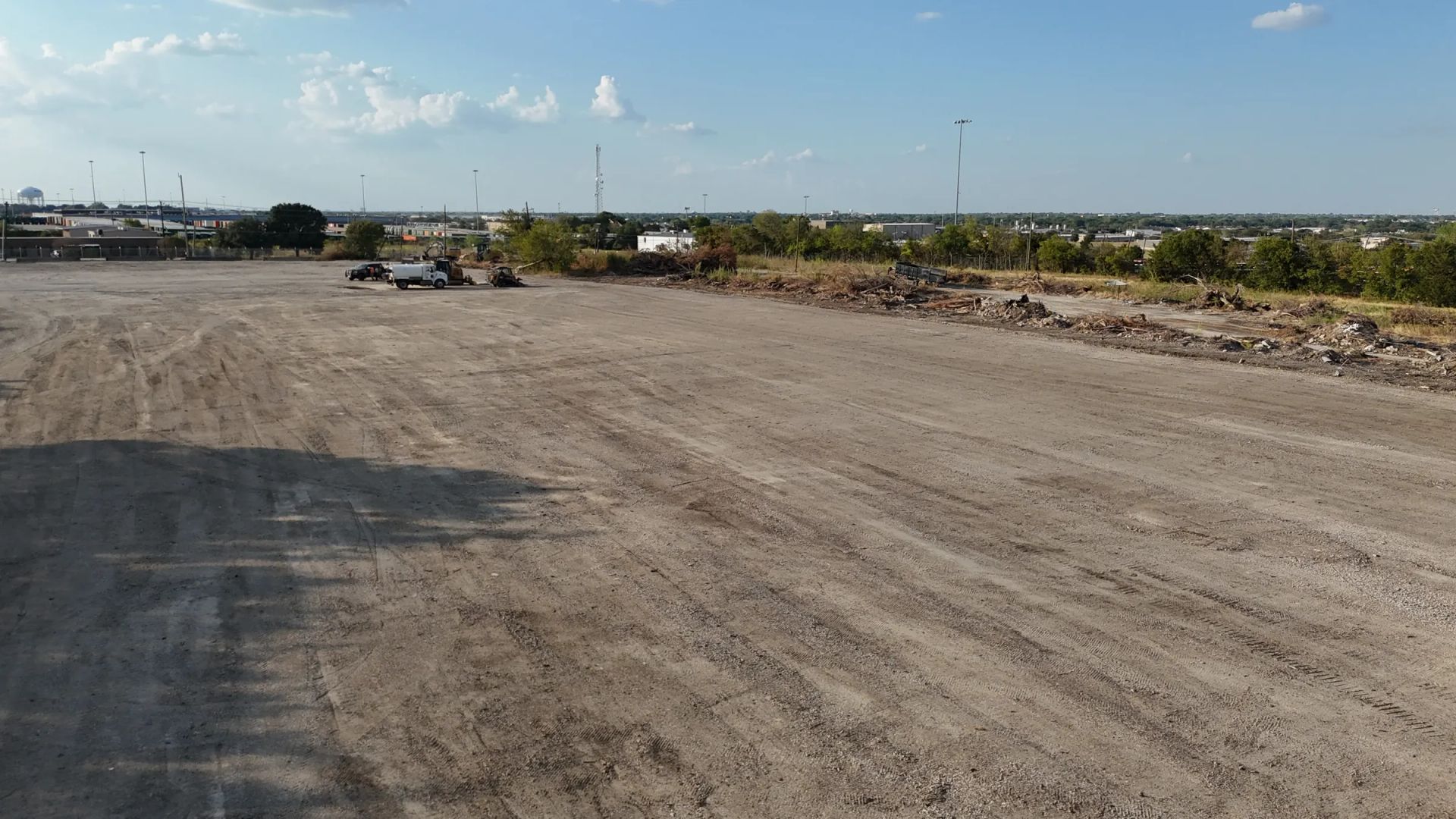
A pad is only as good as the grade under it.
House pads, commercial sites, and heavy-truck lots
- House pads and acreage homesites. We look at the house, driveway, and yard together. If the site sits well back from the road, we account for the access your foundation crew and delivery trucks will need.
- Barns, shops, and equipment buildings. The grade at the doors matters as much as the grade under the building. Tell us what will be coming in and out so we can look at the approach, the room to turn, and where water will run across it.
- Commercial building pads. We work from the civil, foundation, and soils documents available for the job. Those tell us the limits of the work, the required grades, and where to account for material hauling, testing, and access for the next trades.
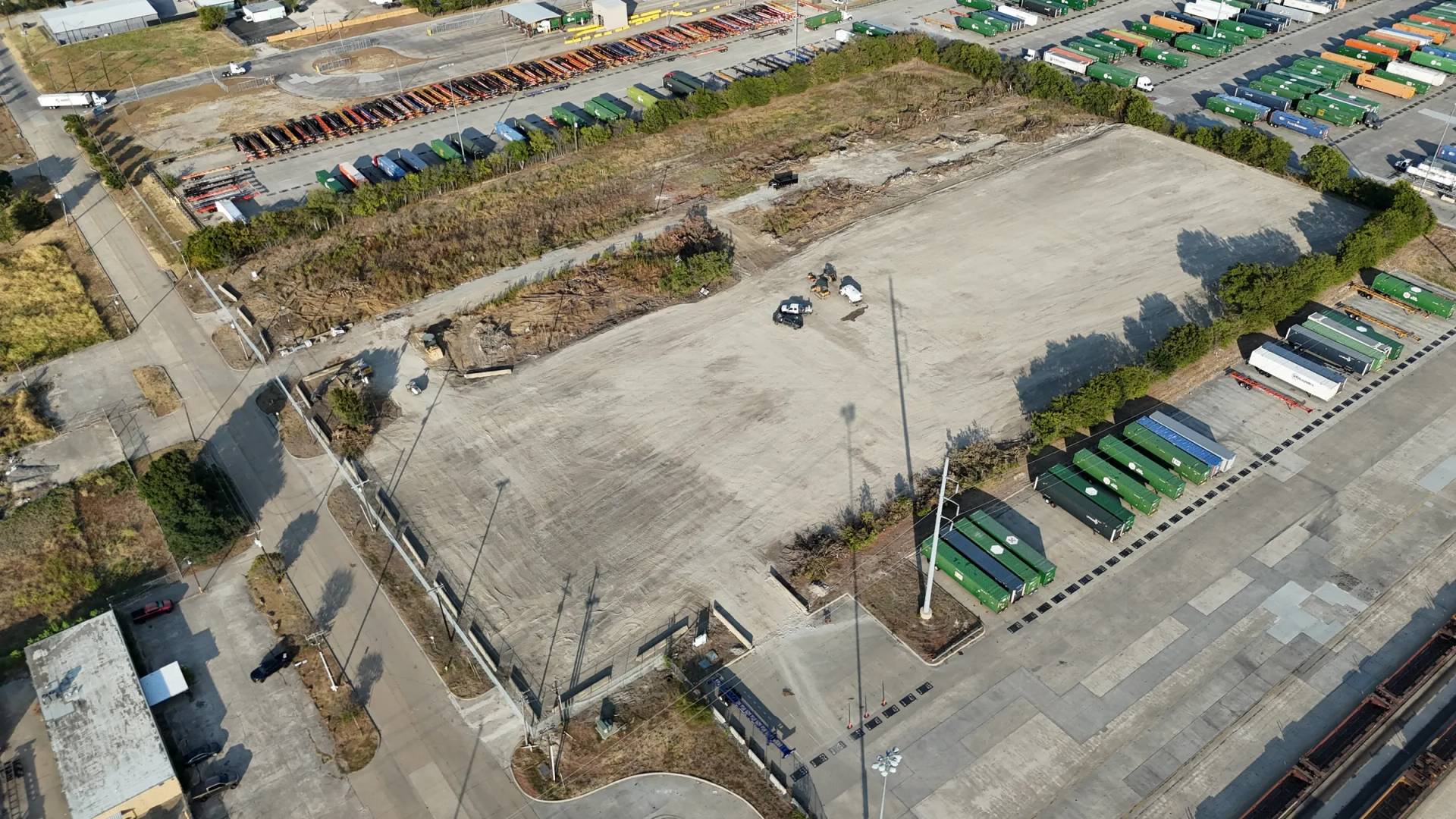
- Truck stops, overnight truck parking, and equipment yards. We've prepared large lots for heavy trucks. We look closely at entrances, tight turns, and parking rows because that's where loaded trucks repeatedly put weight and wear on the same ground. The plans and intended traffic determine the base work. We spell out whether we're handing over graded subgrade, the prepared soil under the surface, or also furnishing and placing aggregate base.
Utility locates before we dig
We review available utility information and coordinate required line locates through Texas811 before excavation. On acreage, we also ask about private lines to barns, shops, wells, troughs, irrigation, and septic systems. Those can need a separate locate. If you know where an old line runs, tell us when we walk the site so we can account for it.
We can include land clearing in the same estimate. For jobs with deeper cuts, trenching, or substantial material hauling, see our commercial excavation services.
Send us what you have
A map pin, a few photos, and the size of the building or lot are enough to start. If your builder has given you a pad elevation, or you have civil plans or a soils report, send those too. We'll look it over and tell you what we'd need to see on site to put a price on the job.
How the job runs
Send us what you have
A map pin, a few photos and the size of the building or lot. A pad elevation, civil plans or a soils report help.
Send the detailsWe walk it and quote
We walk the site, look over the plans, check for utilities and put the work in one free estimate.
How estimates workWe clear, grade and pad
We strip the footprint, build the pad in compacted lifts and grade so water leaves the building.
Mass excavation
Where we work
We prep sites from Corsicana, TX along the I-45 corridor: Dallas, TX and Fort Worth, TX to the north, Waco, TX to the west and Houston, TX to the south, and surrounding areas.
Questions about site prep & building pads
Do you build house pads and commercial pads?
Yes. We build house pads, barn and shop pads and commercial building pads, placing and compacting the fill in lifts and grading so water runs away from the foundation.
Can one crew take a site from clearing to pad?
Yes. We handle land clearing, excavation, grading and compacted building pads with one crew, and put the work in one estimate.
Why do two pads the same size cost different amounts?
The elevation matters as much as the footprint. On a one-acre lot, changing the grade by an average of six inches changes the earthwork by about 807 cubic yards in place. A high site may have soil we can cut and reuse; a low or sloping one may need fill brought in.
Do you do truck lots and parking lots?
Yes. We've prepared large lots for heavy trucks, including truck stops, overnight truck parking and equipment yards. The estimate spells out whether we hand over graded subgrade or also furnish and place aggregate base.
How do you avoid underground utilities?
We review available utility information and coordinate required line locates through Texas811 before excavation. On acreage, tell us about private lines to barns, shops, wells, troughs, irrigation or septic, since those can need a separate locate.
Do you offer same-day site prep?
Generally not. Site prep is usually booked days or weeks ahead. If your project has a very short timeline, call (903) 493-9401 and we'll work out a schedule that suits everyone.
Are site prep estimates free?
Yes. Every estimate is free and explains the cost, and what it's based on, before work starts.
Let us clear the way